Members
National Renewable Energy Laboratory
Robert Baldwin, Principal Scientist
 Robert Baldwin has extensive experience in catalysis, reaction engineering, biomass gasification, biomass liquefaction, upgrading of bio-oil, and advanced biofuels. He received BS and MS degrees in chemical engineering from Iowa State University and a PhD in chemical engineering from Colorado School of Mines.
Gregg Beckham, Senior Engineer
 Research interests: (Bio)catalyst design for lignin deconstruction and utilization, cellulase enzyme structure-function relationships, biopolymer material properties, statistical mechanics methods
Steven Christensen
Jesse Hensley, Supervisor - Catalysis Research and Engineering
 Research interests: Production of premium fuels and chemicals from gasified biomass, low-temperature hydrodeoxygenation, advanced equipment and laboratory design, and membrane separations.
Katherine Hurst, Research Scientist
 Katherine Hurst's research interests include the development of novel materials for application in fuel cells and hydrogen storage. The work focuses on synthesis and characterization of metal alloy and metal oxide nanoparticles with emphasis on the development and application of core-shell nanostructured materials. Dr. Hurst received a B.S. in Natural Science Chemistry from the University of Puget Sound, followed by the completion of a M.S. in Chemical Engineering from the Colorado School of Mines. She received her Ph.D. in Chemical Engineering. Her thesis, which was performed at NREL under the direction of Michael J. Heben, focused on purification and gas adsorption of single-walled carbon nanotubes and their application within carbon-based hydrogen storage materials. She accepted a National Institute of Standards (NIST) postdoctoral appointment, working with John H. Lehman. Her research centered on the development of highly absorptive carbon-based optical coatings and also investigated the photochemical activity of nanostructured carbon material. In 2009, she accepted a Research Scientist position at NREL within the DOE Hydrogen Storage Center of Excellence. Since that time she has expanded the breadth of her work to also include applications of metal oxides and modified catalyst-carbon materials to energy storage applications. Currently, Dr. Hurst is the principle investigator of a project titled “Direct Morphological and Compositional Control of Platinum Group Metal Thin-Film Catalysts by Atomic Layer Deposition.”
Kim Magrini, Catalysis and Thermochemical Sciences Group Manager,
Principal Scientist
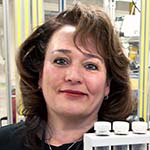 Kim Magrini is a principal research scientist and group manager in the National Renewable Energy Laboratory's National Bioenergy Center. She manages NREL's Catalysis and Thermochemical Sciences Group, which focuses on the development of catalytic approaches to biofuels production from syngas and pyrolysis. She has 25 years of research and management experience in academic, industrial, and national laboratory environments and has more than 80 peer-reviewed publications, one patent, and 110 presentations at national and international meetings. Her research areas include catalyst development for syngas conditioning, hydrogen production, thermochemical fuels and chemicals production from pyrolysis liquids and vapors, power production, and rapid comprehensive characterization of soils and chars using pyrolysis molecular beam mass spectrometry. She is currently leading a team to produce hydrocarbon fuels via catalytic upgrading of biomass pyrolysis vapors using a Davison Circulating Riser reactor system.
Calvin Mukarakate, Senior Scientist
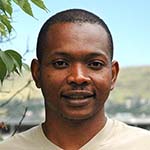 Research Interests
Production of transportation fuels from biomass pyrolysis vapors
Selective conversion of biomass pyrolysis vapors to form monomers for renewable polymers
Production of hydrogen and chemical intermediates from pyrolysis aqueous waste streams
Areas of Expertise
Catalyst fast pyrolysis of biomass to produce transportation fuels and chemicals
Reforming pyrolysis aqueous waste streams to process hydrogen, hydrocarbon fuels, and chemicals
Flash pyrolysis of biomass using an advanced captive sample reactor (wire mesh)
Laser ablation time-of-flight mass spectrometry for the analysis of biomass materials
Photoionization time-of-flight mass spectrometry for studying the pyrolysis of biomass model compounds
Education
Ph.D., Physical Chemistry, Marquette University, 2008
B.Sc., Honors Mining Engineering, University of Zimbabwe, 2003
Research Interests
Production of transportation fuels from biomass pyrolysis vapors
Selective conversion of biomass pyrolysis vapors to form monomers for renewable polymers
Production of hydrogen and chemical intermediates from pyrolysis aqueous waste streams
Areas of Expertise
Catalyst fast pyrolysis of biomass to produce transportation fuels and chemicals
Reforming pyrolysis aqueous waste streams to process hydrogen, hydrocarbon fuels, and chemicals
Flash pyrolysis of biomass using an advanced captive sample reactor (wire mesh)
Laser ablation time-of-flight mass spectrometry for the analysis of biomass materials
Photoionization time-of-flight mass spectrometry for studying the pyrolysis of biomass model compounds
Education
Ph.D., Physical Chemistry, Marquette University, 2008
B.Sc., Honors Mining Engineering, University of Zimbabwe, 2003
Nathan Neale, Senior Scientist
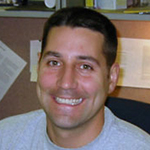 Nate Neale received his B.A. degree in chemistry from Middlebury College in 1998, where he studied radical substitution reactions at activated arenes and the binding mode of cisplatin, a common commercial anti-cancer drug, to a model DNA fragment. His scientific training continued as a graduate student under Prof. T. Don Tilley at the University of California, Berkeley, investigating the mechanism by which a transition-metal catalyst facilitates the polymerization of stannanes to polystannanes, a class of inorganic polymers with unique optical and electronic properties. As a postdoctoral researcher at NREL, he worked on controlling the synthesis and surface chemistry of TiO2 nanostructures for dye-sensitized solar cells in the laboratories of Dr. Arthur J. Frank. After a brief stint at the University of Colorado, Boulder, during which he worked in collaboration with Dr. Frank, Dr. Arthur J. Nozik, and Prof. David Jonas on photoelectrodes for photoelectrochemical water splitting, he returned to NREL as a staff scientist in 2008. His current research interests are focused on tailoring the chemical structure and photophysics of nanostructured inorganic semiconductors and catalysts for photovoltaics, solar fuels, and related energy conversion and storage concepts.
Research Interests
Solar energy conversion strategies featuring quantum-confined and bulk semiconductors
Synthesis of nanostructured inorganic materials
Charge transport processes in inorganic semiconductors
Photoelectrochemical properties of homogeneous and heterogeneous catalysts
Education
2003 Ph.D. Inorganic Chemistry; University of California, Berkeley
1998 B.A. Chemistry (high honors) with Political Science minor; Middlebury College, Vermont
Nate Neale received his B.A. degree in chemistry from Middlebury College in 1998, where he studied radical substitution reactions at activated arenes and the binding mode of cisplatin, a common commercial anti-cancer drug, to a model DNA fragment. His scientific training continued as a graduate student under Prof. T. Don Tilley at the University of California, Berkeley, investigating the mechanism by which a transition-metal catalyst facilitates the polymerization of stannanes to polystannanes, a class of inorganic polymers with unique optical and electronic properties. As a postdoctoral researcher at NREL, he worked on controlling the synthesis and surface chemistry of TiO2 nanostructures for dye-sensitized solar cells in the laboratories of Dr. Arthur J. Frank. After a brief stint at the University of Colorado, Boulder, during which he worked in collaboration with Dr. Frank, Dr. Arthur J. Nozik, and Prof. David Jonas on photoelectrodes for photoelectrochemical water splitting, he returned to NREL as a staff scientist in 2008. His current research interests are focused on tailoring the chemical structure and photophysics of nanostructured inorganic semiconductors and catalysts for photovoltaics, solar fuels, and related energy conversion and storage concepts.
Research Interests
Solar energy conversion strategies featuring quantum-confined and bulk semiconductors
Synthesis of nanostructured inorganic materials
Charge transport processes in inorganic semiconductors
Photoelectrochemical properties of homogeneous and heterogeneous catalysts
Education
2003 Ph.D. Inorganic Chemistry; University of California, Berkeley
1998 B.A. Chemistry (high honors) with Political Science minor; Middlebury College, Vermont
Mark Nimlos, Principal Scientist
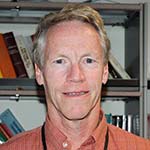 Dr. Mark R. Nimlos is a principal scientist in the National Renewable Energy Laboratory's (NREL's) National Bioenergy Center (NBC). He has more than 25 years of experience in the design and management of complex, multiparty, biomass-related research programs and projects with a focus on thermochemical conversion research, reaction kinetics, computational modeling, photochemistry, and molecular spectroscopy. Nimlos has served as lead scientist and manager on numerous projects funded by the U.S. Department of Energy and by private industry. He has authored or co-authored more than 100 peer-reviewed scientific papers and/or book chapters.
Catalytic upgrading of pyrolysis vapors
Catalytic production of coproducts from biomass pyrolysis vapors
Combustion chemistry of biofuels
Mechanisms of biomass pyrolysis
Dr. Mark R. Nimlos is a principal scientist in the National Renewable Energy Laboratory's (NREL's) National Bioenergy Center (NBC). He has more than 25 years of experience in the design and management of complex, multiparty, biomass-related research programs and projects with a focus on thermochemical conversion research, reaction kinetics, computational modeling, photochemistry, and molecular spectroscopy. Nimlos has served as lead scientist and manager on numerous projects funded by the U.S. Department of Energy and by private industry. He has authored or co-authored more than 100 peer-reviewed scientific papers and/or book chapters.
Catalytic upgrading of pyrolysis vapors
Catalytic production of coproducts from biomass pyrolysis vapors
Combustion chemistry of biofuels
Mechanisms of biomass pyrolysis
David Robichaud, Senior Thermochemical Conversion Scientist
 Research Interests
Production of premium fuels and chemicals from biomass pyrolysis
Computational modeling
Chemical mechanisms of catalytic surfaces
Areas of Expertise
Thermochemical conversion sciences
Gas kinetics and mechanisms
Gasification
Pyrolysis
Catalytic fast pyrolysis
Heterogeneous catalysis
C–C coupling
Zeolites
Kinetics and reaction mechanisms
Reactor scale-up and validation
Computational modeling
Gas phase reaction modeling
Heterogeneous chemistry
Education
Ph.D., Chemistry, California Institute of Technology, 2007
B.S., Chemistry/Mathematics, California State University, Fullerton, 2001
Research Interests
Production of premium fuels and chemicals from biomass pyrolysis
Computational modeling
Chemical mechanisms of catalytic surfaces
Areas of Expertise
Thermochemical conversion sciences
Gas kinetics and mechanisms
Gasification
Pyrolysis
Catalytic fast pyrolysis
Heterogeneous catalysis
C–C coupling
Zeolites
Kinetics and reaction mechanisms
Reactor scale-up and validation
Computational modeling
Gas phase reaction modeling
Heterogeneous chemistry
Education
Ph.D., Chemistry, California Institute of Technology, 2007
B.S., Chemistry/Mathematics, California State University, Fullerton, 2001
Daniel Ruddy, Senior Scientist
 Dan received a Ph.D. degree in Inorganic Chemistry from the University of California, Berkeley in 2008. His doctoral research combined synthetic molecular and materials chemistry with detailed characterization and performance testing of novel heterogeneous catalysts. He then worked on a variety of catalyst development projects at the Dow Chemical Company in the Renewable Feedstocks & Process Catalysis Group before joining the Chemistry and Nanoscience Center at the National Renewable Energy Laboratory (NREL) in 2010. Ruddy's research at NREL integrates the synthesis and characterization of functional molecules and materials to enable advanced renewable fuels production and related energy technologies. Areas of expertise include inorganic molecular and materials synthesis and characterization, molecular precursor approaches to nano- and meso-scale materials, compositional and morphological control, surface chemistry, catalysis science, heterogeneous catalyst design and synthesis, zeolite synthesis and modification, electrocatalysis and photocatalysis, and in-situ and operando characterization techniques.
Joshua Schaidle, Thermochemical Conversion Platform Manager and Research Engineer
 Joshua Schaidle works in the Thermochemical Catalysis Research and Development group within the National Renewable Energy Laboratory's (NREL's) National Bioenergy Center (NBC) and leads a project focused on developing catalysts, processes, and reactor systems for the catalytic upgrading of pyrolysis vapors to produce fungible transportation fuels.
Research interests include: biomass conversion to fuels and chemicals; environmentally sustainable engineering practices; photochemical and electrochemical routes for fuel production; rational design of catalysts through the combination of experiment and theory; early-transition metal carbide and nitride catalysts; process design and optimization; life-cycle assessment
Derek Vardon, Research Engineer, Biochemical Catalysis
 Derek Vardon is a staff research engineer in the National Bioenergy Center's (NBC's) Biochemical Catalysis group at NREL. His main research focus is on catalyst design, materials characterization, and reaction engineering. Derek's research interests include catalytic conversion of biomass to fuels and chemicals, integrated biological and chemo-catalytic processes, bio-based plastics for advanced materials and commercialization of bio-based products
Colorado School of Mines
Geoff Brennecka, Assistant Professor, Metallurgical and Materials Engineering
 The Brennecka group works on fabricating, characterizing, and analyzing functional electroceramics such as ferroelectric and piezoelectric materials. We work with materials in thin film form (typically via chemical solution deposition or sputtering) as well as powder-derived bulk ceramics with a particular focus on how integration and processing approaches affect defect chemistry and dynamic response(s) of these materials.
Moises Carreon, Associate Professor, Chemical and Biological Engineering
Coors Developmental Chair
 My research interests focus on the rational design of advanced functional porous materials at different length scales, including zeolites, mixed metal oxides and metal organic frameworks for applications in molecular gas separations, heterogeneous catalysis, and gas storage. We aim to have a better understanding of the formation mechanisms of these materials and to establish its fundamental structure/separation and structure/catalytic relationships.
Examples of our current research interests include: (1) Zeolite and metal organic framework membranes for carbon dioxide capture which has relevant implications in natural gas and flue gas treatment; (2) Catalytic conversion of carbon dioxide into useful chemicals such as cyclic carbonates and carbamates; (3) natural gas storage employing smart-nanovalve adsorbent composites; and (4) catalytic transformations on biofuels with improved cold flow properties.
Andrew Herring, Professor, Chemical and Biological Engineering
 Research in the Herring group is generally in the area of Energy with a particular emphasis on Renewable Energy. We work at the interface of materials science and chemical engineering and most of our work is collaborative in nature the majority with the National Renewable Energy Laboratory, also in Golden. We focus in two sub-groups:
Electrochemical and Photoelectrochemical Engineering: For solar energy to be exploited it must be converted into electricity and fuels, utilizing materials that can do this efficiently, with minimum expense, and with maximum durability. These materials need to be synthesized, characterized, and optimized. Furthermore, renewable energy is by its nature intermittent and not easily stored, so its conversion to chemical energy, hydrogen or other fuels, and its use in highly efficient fuel cells is an attractive scenario. We work extensively on polymer electrolyte fuel cells, both in component development (membranes and catalysts) and at the single fuel cell level.
Thermochemical Conversion of Hydrocarbons: As crude oil becomes a scarce resource alternative sources of hydrocarbons need to be exploited, as in the immediate short term liquid fueled light cars and trucks remain the ubiquitous mode of transportation. The world still has enormous resources of bio-degraded crude oil with high energy densities but challenging flow properties for exploitation. Using advanced pyrolysis coupled with molecular beam mass spectrometry we are developing rapid screening techniques that may allow flow characteristics of the resource to be linked to chemical information. Biomass could potentially supply a significant amount of the worlds hydrocarbon fuel, however, by its very nature biomass derived hydrocarbons contain a significant amount of heteroatoms and are challenging to convert into a synthetic crude for subsequent reforming. We are now working to develop unit operations and catalysts that will convert biomass into reforamble hydrocarbon resources.
Robert Kee, George R. Brown Distinguished Professor, Mechanical Engineering
 Dr. Kee's research interests are primarily in modeling and simulation of chemically reacting fluid flow. Applications are generally in the area of clean energy, including fuel cells, photovoltaics, and advanced combustion.
Dr. Kee's sponsored-research efforts are primarily in the modeling and simulation of thermal and chemically reacting flow processes, with applications to combustion, electrochemistry, and materials manufacturing. His fuel-cell research concentrates on elementary chemistry and electrochemistry formulations and their coupling with reactive fluid flow. Primary applications are to solid-oxide fuel cells operating on hydrocarbon fuels. His combustion research emphasizes the use of elementary chemical kinetics to understand fundamental flame structure.
Recent research includes efforts on catalytic-combustion and water-mist flame suppression. The materials-processing efforts emphasize the design, optimization, and control of chemical-vapor-deposition processes, with applications ranging from thin-film photovoltaics to CMOS semiconductor devices. The work includes development of computational methods and software to solve systems of stiff differential equations. It also includes development of an extensive system of general-purpose chemical-kinetics and molecular-transport software.
Dr. Kee is the principal architect and developer of the CHEMKIN software, which is the leading software package used worldwide for simulating chemically reacting flow.
C. Mark Maupin, Assistant Professor, Chemical and Biological Engineering
 The ever increasing worldwide demands for energy, along with uncertain petroleum sources and the possibility of global climate change, has dictated the necessity for our nation to develop a sustainable and renewable alternative to fossil transportation fuel. Biofuels derived from lignocellulosic biomass are attractive alternatives due to the vast infrastructure already in place for the distribution of a liquid transportation fuel, and the fact that fuel derived from cellulose does not compete with human and livestock food resources. Furthermore, since cellulose is the most abundant renewable biopolymer on earth the feedstock for cellulosic biofuels is almost inexhaustible, and the utilization of cellulose for liquid fuel can achieve zero net carbon dioxide emission thereby making it a crucial component in our efforts to reduce green house gases.
Cellulosic biofuels are created by hydrolyzing cellulose to glucose and subsequently fermenting the glucose to make biofuel. Several major obstacles remain with regard to the viability of cellulosic biofuels including overcoming the natural resistance of cellulose to enzymatic depolymerization, known as biomass recalcitrance, which is primarily responsible for the high cost of cellulosic biofuels. To formulate ways to overcome biomass recalcitrance, a basic understanding of the substrate and enzymes involved in the hydrolysis of cellulose are needed. The enzymatic driven hydrolysis of crystalline cellulose to glucose is regulated by three different cellulases: endocellulase (EG), exocellulase (cellobiohydrolase, CBHI and CBHII), and β-glucosidase (BG).
The goal of my group’s proposed research is to model each of the three enzymes and evaluated their ability to bind substrate and catalyze the hydrolysis reaction. These simulations will utilize and develop novel methodologies so that the tools of statistical mechanics may be used to evaluate the underlying physics driving the enzyme substrate interactions and the catalytic reaction. These studies will provide insights into the enzyme systems and open new possibilities to engineering more efficient enzymes. Through collaborations with experimentalists and engineers these possible routes for enzyme improvement may be tested in vitro and subsequently implemented directly into test reactors (in vivo). The information gained from the in silico, in vitro, and in vivo experiments will then be used in the next generation bioreactors which will provide our nation with a renewable liquid transportation fuel alternative.
Ryan O'Hayre, Professor, Metallurgical and Materials Engineering
Director, Materials Science Program
 Professor Ryan O’Hayre's Advanced Energy Materials Laboratory develops new materials and devices to enable alternative energy technologies including fuel cells and solar cells. Current research interests includethe delopment of nitrogen-functionalized carbon support structures for direct methanol fuel cell catalysis, ceramic-based proton conducting fuel cell and electrolysis devices, and redox-active oxides for solar-thermal production of hydrogen from water.
Svitlana Pylypenko, Assistant Professor, Chemistry
 Research interests: Our group investigates surfaces and interfaces of functional materials including catalysts, polymers, semiconductors and metals targeting a wide range of applications. We focus on building relationships between surface composition and structure, materials properties and their performance with the eventual goal to design next generation of materials which provide high efficiency at the fraction of the cost. Significant efforts of our team are dedicated to development of cost-effective materials for alternative energy applications.
Ryan Richards, Professor, Chemistry
 Research interests: Exploring the interface of nanoscale materials and catalysis by: 1) pursuing new methods to manipulate the preparation of metals, metal oxides and porous materials at the nanoscale to control porosity, surface faceting, size, shape and orientation; 2) examining the structure/activity relationships these materials exhibit; 3) apply the nano-engineered materials in a spectrum of industrially important catalytic reactions to determine how their properties affect the process; 4) combining in situ spectroscopy and modeling to gain mechanistic information; and 5) collaborate with theoreticians and other instrumental specialists to develop a theoretical understanding of the properties associated with preparing and applying these systems in catalytic processes.
Timothy Strathmann, Professor, Civil and Environmental Engineering
 Research interests: Professor Strathmann's research includes the development of innovative catalytic materials and processes for water purification, bioenergy production, and resource recovery from waste streams. Principles of material science, green chemistry, and environmental engineering are combined to guide the development of more sustainable technologies to address some of our greatest environmental challenges, including providing safe drinking water and renewable sources of energy.
Brian Trewyn, Assistant Professor, Chemistry
 Research interests: Synthesis of multifunctional high surface area, porous inorganic and organic materials, expanding the repertoire of characterization techniques of these materials, and application development for heterogeneous catalysis, drug delivery and controlled release, electrocatalysis, and environmental and energy challenges